The migration story of Ejigbo, a historic town in Osun State, Nigeria, to Côte d’Ivoire is not just a tale of movement but a remarkable chronicle of cultural resilience, economic ingenuity, and enduring cross-border identity. For over a century, the people of Ejigbo have sustained deep and meaningful ties with Côte d’Ivoire, transforming what began as economic migration into a transnational legacy.
A Journey Rooted in 1902
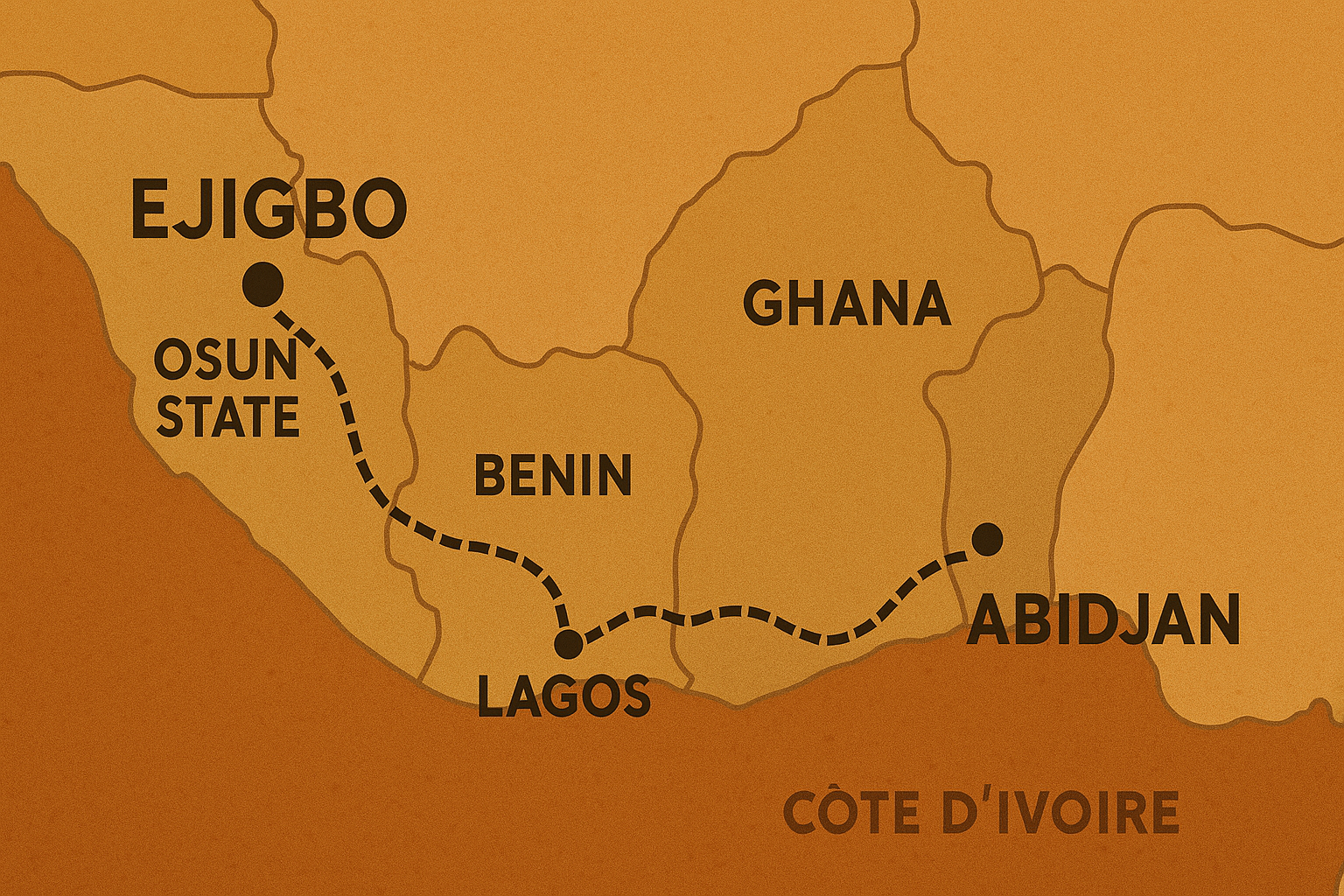
The migration of Ejigbo indigenes to Côte d’Ivoire dates back to 1902, when the first group of traders settled in Treichville, a bustling suburb of Abidjan named after the French colonial officer Marcel Treich-Laplène. Long before this, Ejigbo migrants had sojourned in other West African nations, such as the Republic of Benin, Togo, and Ghana. However, Abidjan soon became their focal destination due to its strategic economic importance in French West Africa.
Early migrants were mostly traders and hunters who capitalised on the economic opportunities of the coastal economies. They exported indigenous goods, such as “kita”, a fabric once worn by Yoruba royalty, and traded them for products unavailable in Nigeria. These initial ventures laid the groundwork for a sustained commercial presence in Côte d’Ivoire.
The Rise of a Diaspora
Today, the Ejigbo community in Côte d’Ivoire is in its fourth and fifth generations. Many of the descendants of the original settlers have been born and raised in cities such as Abidjan, Bouaké, and San-Pédro. They bear Ivorian names, hold local identity cards, and speak fluent French. Yet, in a testament to their deep cultural roots, many still speak Yoruba fluently and maintain strong kinship ties with their ancestral hometown.
Culturally, the diaspora has found a delicate balance between integration and preservation. It is not uncommon to find Ejigbo indigenes who blend their Yoruba traditions with local Ivorian customs, celebrating Yoruba festivals, engaging in family rituals, and teaching their children about their heritage despite growing up in francophone communities.
Trade: The Lifeblood of Migration
Commerce remains the beating heart of Ejigbo’s migration. The economic connection between Ejigbo and Côte d’Ivoire has created a mutually sustaining loop. Traders regularly shuttle between the two countries, buying goods in Nigeria and selling them in Abidjan and vice versa. This has led to the establishment of a robust transport network. Direct commercial buses travel weekly from Ejigbo to Francophone African countries, with most of the trips destined for Abidjan.
Goods such as textiles, electronics, cosmetics, and traditional medicines form the core of this bilateral trade. These commercial activities not only sustain families abroad but also boost local economies in Ejigbo, as remittances and imports from Côte d’Ivoire provide capital for new businesses and real estate development.
A Shared Language and Currency
Back in Ejigbo, the impact of this migratory bond is visibly profound. In many homes, especially those with relatives in Abidjan, French is spoken as fluently as Yoruba. Children grow up learning both languages, and some even attend bilingual schools. The culinary scene is not left out; foods like attiéké (cassava couscous) and alloco (fried plantains), staples in Ivorian cuisine, are now part of local menus in Ejigbo.
Moreover, the CFA franc is widely accepted in Ejigbo’s major markets, and exchange booths operating from roadside kiosks have become part of the town’s commercial landscape. Many traders transact in both naira and CFA, symbolising a cultural and financial duality that few other Nigerian towns can boast.
The Role of Women
Women have played a pivotal role in Ejigbo’s migration narrative. In the 1940s and 1950s, many Ejigbo women migrated to Côte d’Ivoire to establish themselves in the informal market sector. They sold cloth, dried fish, traditional herbs, and other goods in Abidjan’s markets. Through their enterprise, they earned social status and economic power, eventually becoming matriarchs of trading networks that continue to span both countries.
These women not only bridged economies but also served as cultural custodians, ensuring that their children and apprentices maintained links with their Yoruba identity despite being born abroad.
Diaspora Community Structure
The Ejigbo diaspora in Côte d’Ivoire is not an amorphous group; it is a structured community. Traditional governance structures have been established in key cities where large numbers of Ejigbo indigenes reside. The Ogiyan of Ejigbo, the traditional ruler of the town, delegates authority by appointing community leaders known as Obas in cities like Treichville, Abobo, and Bouaké.
These Obas serve as cultural ambassadors and community coordinators. They mediate disputes, organise social events, facilitate cultural festivals, and help new migrants settle into Ivorian life. Their leadership ensures that the Ejigbo identity remains intact, even as the community evolves in a foreign land.
Childhood Memories and Seasonal Reunions
Among those who grew up in this diaspora setup, there are countless memories of cross-border experiences. Many Ejigbo youths raised in Côte d’Ivoire return to Nigeria during holidays to visit grandparents or attend cultural festivals like Ileya. For them, Ejigbo is not just their parents’ homeland; it is a spiritual anchor.
In interviews with returnees, many recalled being sent back to Nigeria at some point in their upbringing to attend school. Their parents believe this educational grounding in Nigeria is essential for preserving their cultural and national identity, especially as globalisation intensifies.
Abidjan as a Symbol of Prosperity
The connection is so entrenched that in some parts of Ejigbo, Abidjan is colloquially referred to as the “city of gold”. During festive seasons, scores of buses arrive from Côte d’Ivoire, filled with returning migrants bearing gifts, foreign currencies, and goods. The presence of Ivorian license plates during holidays is so common that it has become a symbol of the town’s wealth and international reach.
For families who remain in Ejigbo, having relatives in Côte d’Ivoire is a badge of honour. Many invest in the education of children who will later be sponsored to join their uncles, aunts, or cousins abroad. This system of mutual support keeps the migration cycle alive and ensures its continuity.
Cross-Border Apprenticeship
Another unique aspect of Ejigbo’s migratory tradition is the apprenticeship model. Many parents from neighbouring communities such as Ede, Iwo, and Iragberi send their children to Ejigbo traders with the hope of securing them apprenticeships in Abidjan. Once trained, these apprentices either remain in Côte d’Ivoire to establish businesses or return home to start enterprises of their own.
In both cases, the economic knowledge and social capital acquired in Abidjan are reinvested into local economies, reinforcing the transnational loop of prosperity between the two regions.
Ejigbo as a Gateway Town
Ejigbo’s strategic location and established diaspora make it a major departure hub for West African travel. It is the preferred starting point for many buses heading to francophone countries. Transporters, traders, and travellers all converge in the town weekly, reaffirming Ejigbo’s role as a gateway between Nigeria and the wider ECOWAS region.
Its infrastructure reflects this reality. Guest houses, travel agencies, vehicle maintenance yards, and transport unions thrive around the departure points. The town’s economy has grown around this migratory culture, an economy built not on extraction or industry, but on movement and exchange.
Conclusion
The story of Ejigbo’s migration to Côte d’Ivoire is not just a historical anecdote; it is a living legacy. It reflects the human instinct for survival, prosperity, and identity. While rooted in economic necessity, this migration has produced a unique transnational community that maintains a dual allegiance to both Nigeria and Côte d’Ivoire.
From trade and language to family and faith, Ejigbo’s people have managed to build bridges across borders that endure for generations. And as long as commerce, kinship, and culture continue to thrive, so too will this remarkable journey of the people of Ejigbo.